TEG: The Thirstiest Molecule in the Gas Industry
Natural gas leaves the reservoir wet — saturated with water vapour that, left untreated, condenses in pipelines, corrodes steel and freezes into hydrate plugs that stop flow entirely. Between the wellhead and every dry, pipeline-spec molecule of gas stands one remarkably thirsty liquid: Triethylene Glycol — TEG.
The endless drinking cycle
In a TEG dehydration unit, lean glycol pours down an absorber tower while wet gas rises through it; TEG’s fierce affinity for water strips the vapour molecule by molecule. The now-rich glycol flows to a reboiler, boils off its water, and returns lean to drink again — a regeneration loop that can run for years. TEG won this duty over its glycol siblings on the numbers: high hygroscopicity, low vaporisation loss, thermal endurance through thousands of cycles. Virtually every gas processing plant from Gujarat’s terminals to the Gulf’s mega-trains circulates it.
Off-duty versatility
Outside the gas plant, TEG plasticises resins, humectifies industrial formulations, and serves solvent and air-treatment duties — a quiet second career on the same hygroscopic talent.
Purity keeps the cycle honest
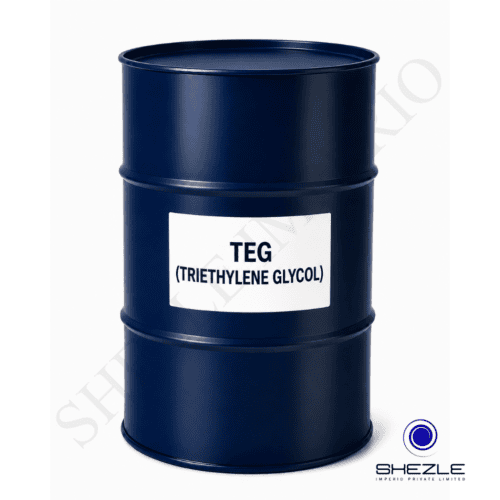
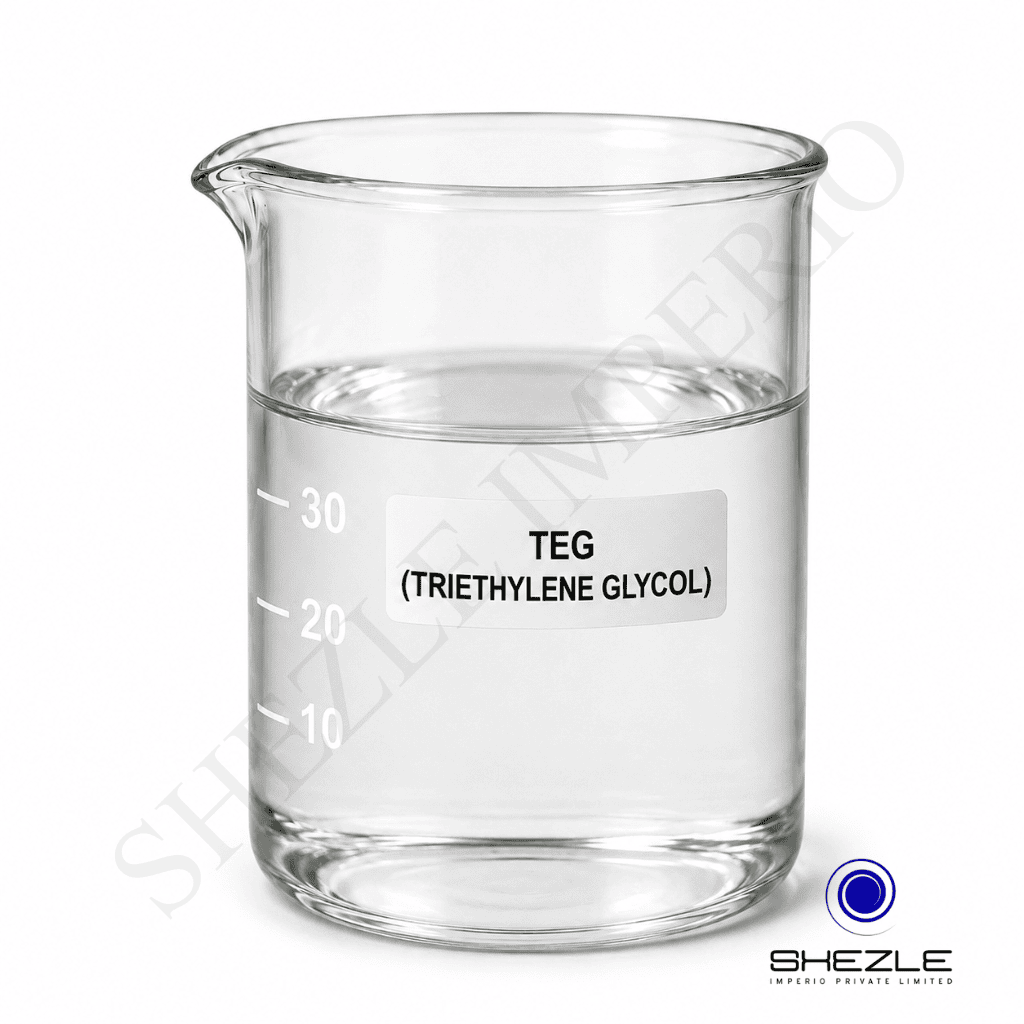
Dehydration efficiency lives on glycol purity, water content and colour — SIPL documents all three per lot, supplying drums and ISO tanks across India, the UAE, Oman, Saudi Arabia and Africa.
Keep the gas dry — visit the TEG product page and request specifications and a quotation today.