The Drill String’s Silent Enemy: Corrosion Control in Water-Based Muds
A drill string is a multi-million-dollar asset spinning inside an electrolyte bath. Water-based mud — the industry’s workhorse fluid — carries dissolved oxygen from every surface pit and shaker screen straight downhole, where it teams up with CO2, chlorides and sometimes H2S to attack pipe at the very connections that take the most mechanical stress. Washouts, twist-offs and fatigue cracks trace back, more often than drillers like to admit, to corrosion pits that started weeks earlier.
Three threats, three tools — or one
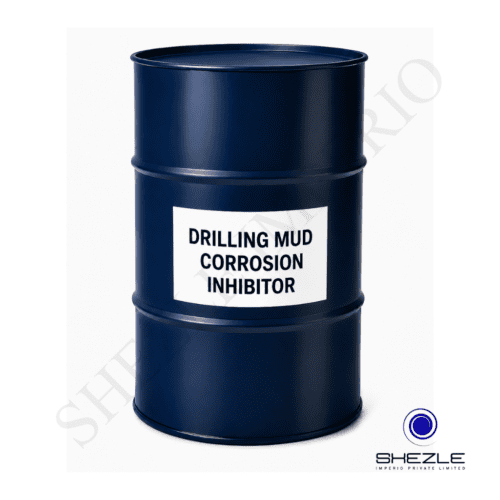
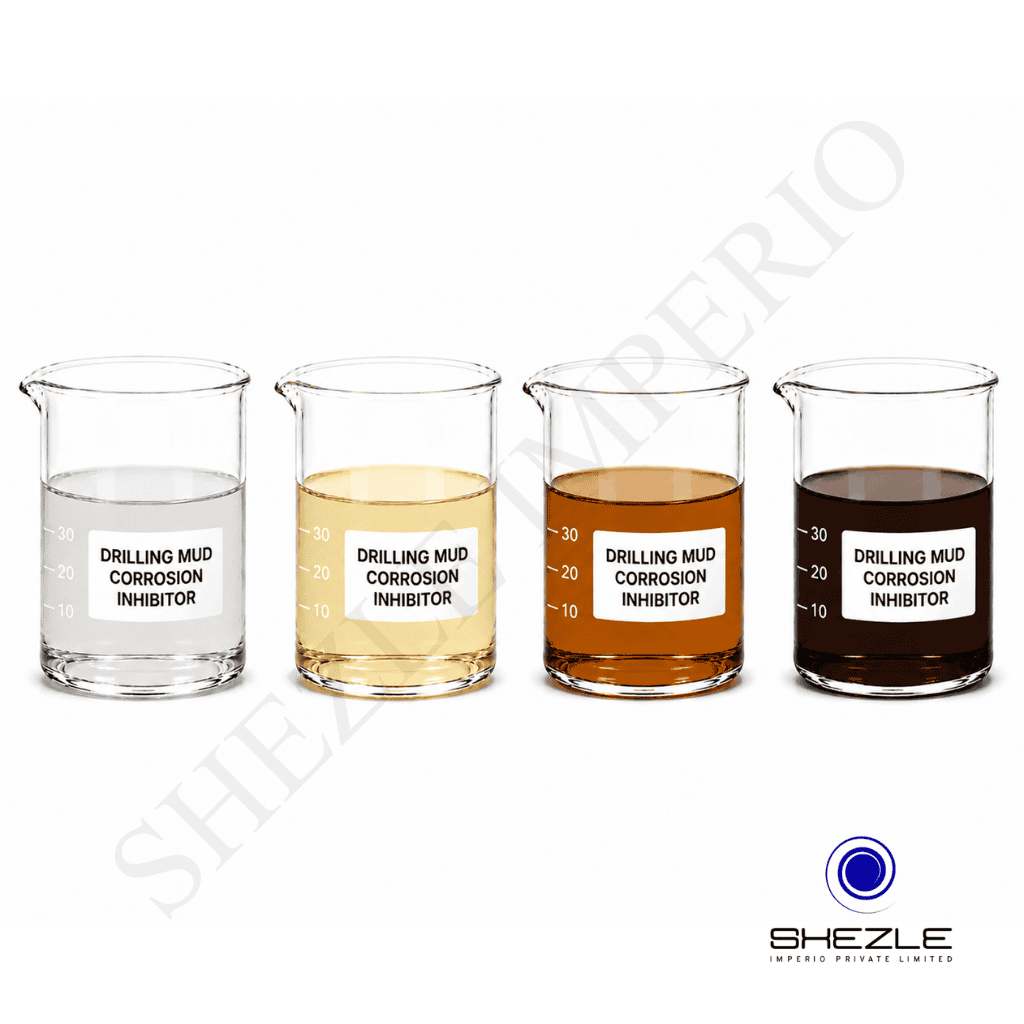
Modern mud programmes fight a linked trio: oxygen attack, electrochemical corrosion cells, and sulphate-reducing bacteria that sour the system. SIPL’s Drilling Mud Corrosion Inhibitor range answers all three ways of working. The Filming Amine type — water-soluble, organic, biodegradable — is the default for dispersed, KCl and saltwater muds, filming string and casing through continuous dosing. The Organophosphate type offers an alternative film mechanism for higher-pH and dispersed systems. And for remote rigs running lean inventories, the Combination grade packs corrosion inhibitor, oxygen scavenger and biocide into a single drum — one treatment, three protections.
Coupons don’t lie
Good programmes are measured, not assumed: corrosion ring coupons in the string tell the truth every trip. SIPL supplies its inhibitors with treatment guidance by mud type, so coupon results land within limits from the first bottoms-up.
Mud chemistry from the source
Shezle Imperio Private Limited is a leading drilling chemicals supplier from Ahmedabad, India, serving drilling contractors and mud companies across India, the Middle East and West Africa — in drums, IBCs and bulk, with the documentation service companies expect.
Keep the string turning — visit the Drilling Mud Corrosion Inhibitor product page and request a treatment recommendation and quotation today.