Inside the Coker: Protecting Steel in the Refinery’s Toughest Neighbourhood
Ask any refinery reliability engineer where corrosion keeps them awake, and the coker overhead ranks near the top of the list. The delayed coker takes the heaviest bottom-of-the-barrel residue and cracks it at severe temperatures — and everything corrosive in that feed concentrates in the overhead vapours. When those vapours condense, chlorides and sulphur species turn the first drops of water into acid, chewing through overhead lines, condensers and exchanger bundles exactly where wall thickness is hardest to inspect.
Chemistry where metallurgy is too expensive
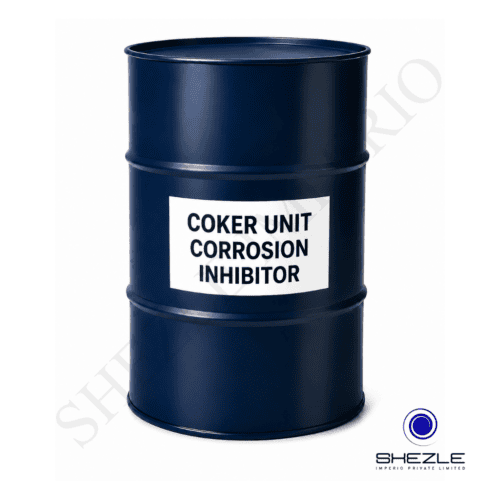
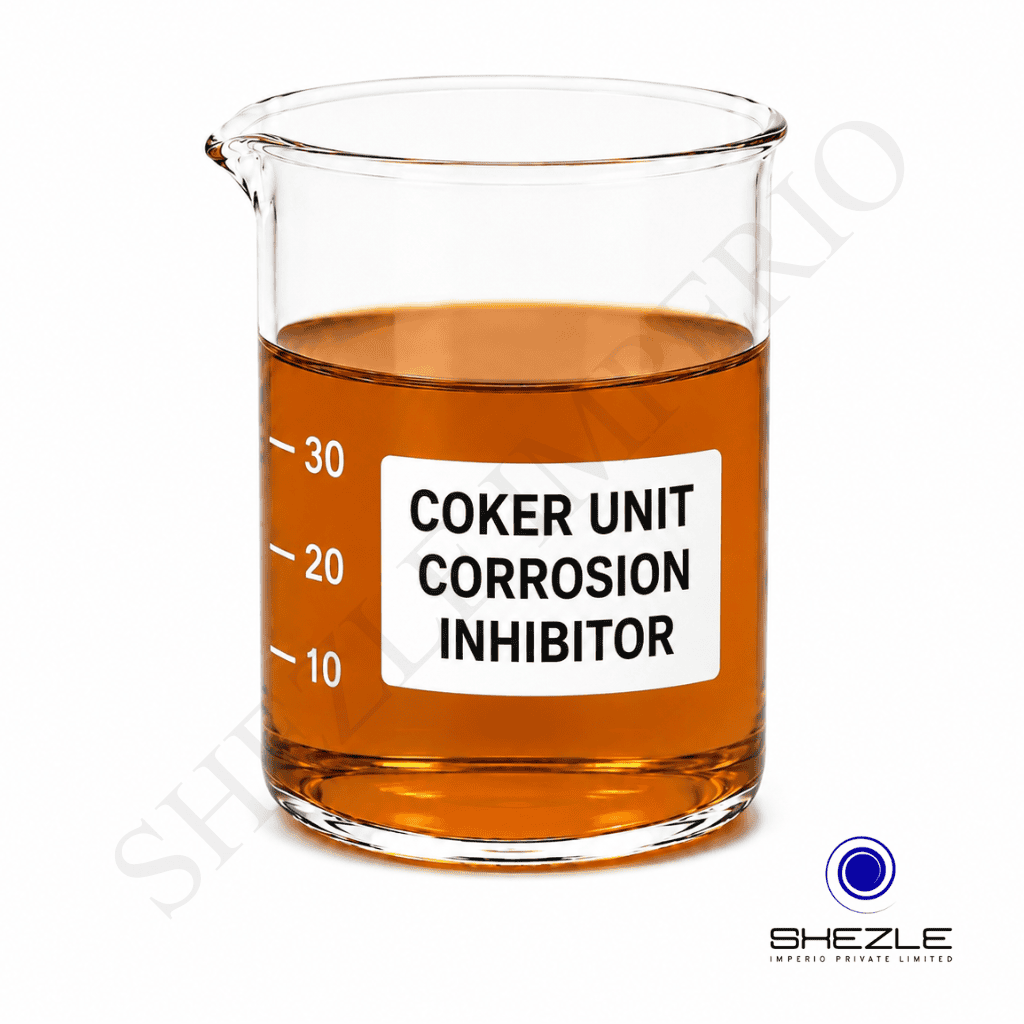
Refiners have two defences: exotic alloys, or chemistry. Alloy upgrades run to millions and wait for turnarounds; a coker overhead corrosion inhibitor programme starts working the day injection begins. SIPL’s Coker Unit Corrosion Inhibitor is designed for continuous injection into the overhead circuit, filming the condensing zone — the exact point of peak attack — and cutting metal loss across delayed cokers, fractionators and process condensers. The result is measured in extended run lengths, protected bundles and deferred capital.
A programme, not just a drum
Overhead corrosion control is a system: wash-water quality, neutraliser balance and inhibitor dosage work together. SIPL supplies its refinery corrosion inhibitor with dosing guidance for the overhead programme, in drums, IBCs or bulk, with documentation refinery procurement teams expect.
Serving the refining belt
From Ahmedabad, Gujarat — neighbour to some of the world’s largest refining capacity at Jamnagar — Shezle Imperio Private Limited supplies refiners across India, the Middle East and Southeast Asia as a specialist refinery chemicals supplier. Severe service demands serious chemistry.
Keep the coker running between turnarounds — visit the Coker Unit Corrosion Inhibitor product page and request a technical discussion and quotation today.