Crude Glycerine: The Co-Product That Learned to Be a Commodity
Every tonne of biodiesel births roughly a hundred kilos of it; every soap kettle drains it in the lye. Crude Glycerine — glycerol wearing the impurities of its origin — flooded world markets when biodiesel boomed, crashed its own price, and then did something interesting: it professionalised. Today crude glycerol trades globally on standardised assays, feeding a refining industry that polishes it toward pharma-grade purity.
The panel is the price
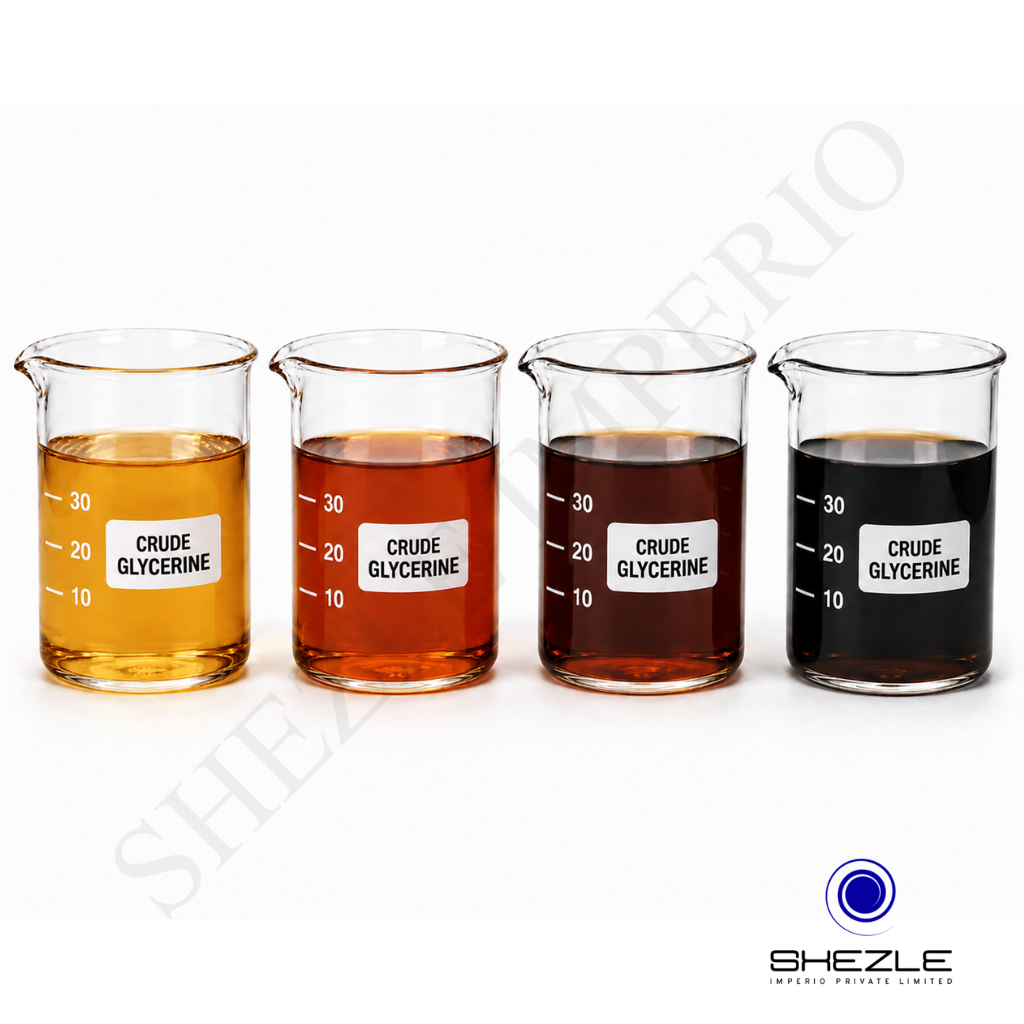
No commodity depends more nakedly on its certificate. Glycerol content sets the band — SIPL trades 80% standard, 70–79% mid, and sub-70% streams — while MONG (matter organic non-glycerol), ash, methanol and moisture decide refining economics line by line. An 80% cargo with low MONG refines sweetly; a dirty 80% may be worth less than a clean 75%. Honest assaying is the trading skill.
Two-way desk
SIPL buys from biodiesel and soap producers across India and supplies refiners and technical users domestically and abroad — China, Europe and Malaysia’s refining hubs — in drums, IBCs and tankers.
Trade the co-product properly — visit the Crude Glycerine page and request current band pricing today.