
Succinic Acid: The Amber Acid Betting on a Bioplastic Future
Chemists first distilled it from Baltic amber centuries ago — hence the old name, Amber Acid — but Succinic Acid’s most interesting chapter is being written now. This modest four-carbon diacid sits on nearly every shortlist of bio-based platform chemicals, because fermentation makes it renewably at scale, and one polymer keeps pulling demand upward: PBS — polybutylene succinate — the compostable bioplastic entering films, packaging and agriculture worldwide.
The workhorse résumé behind the headline
While bioplastics grab attention, succinic acid’s established markets pay the bills. As E363 it acidulates and rounds flavour in foods — a cleaner, softer sourness than citric alone. Pharma uses it in synthesis and excipient chemistry (succinate salts improve many drugs’ behaviour). Alkyds and polyesters build it into coatings and resins; platers and formulators buffer and clean with it. Small molecule, wide payroll.
Grade discipline across three markets
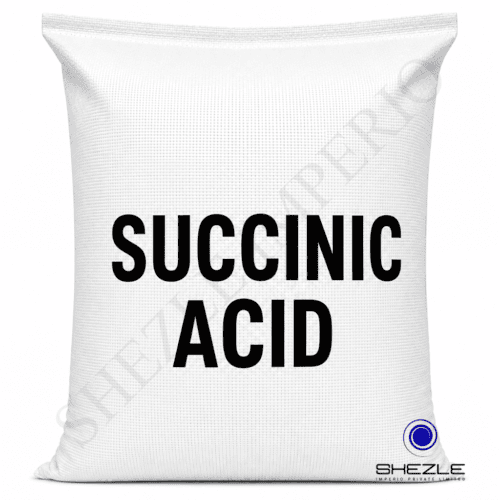
Food, pharma and technical buyers need different certificates from the same white powder — assay, heavy metals, appropriate compliance per grade. SIPL supplies each with its own documentation, in 25 kg bags and bulk.
Positioned for both eras
Shezle Imperio Private Limited is a leading Succinic Acid supplier and exporter from Ahmedabad, India, serving food, pharma and polymer customers across India, the UAE, Europe, the USA and Bangladesh — supplying today’s applications and tomorrow’s bioplastic chain from one desk.
Source the amber acid for whichever future you’re building — visit the Succinic Acid product page and request grade documentation and a quotation today.